The Brass Leedy
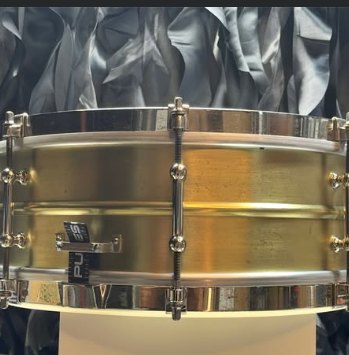
A 1930s 14×5 brass-shell snare drum, relieved of almost one hundred years of environmental toxins
Ninety-odd years of neglect
Ninety-odd years is a long time for bare brass to sit in the world. This 14×5 Leedy came to the bench wearing all of it: a shell gone dull and blotched under decades of oxidation, airborne grime, nicotine, and whatever else the twentieth century saw fit to deposit on it. The hardware still turned, the shell was still true — underneath the neglect was a drum that had simply been waiting.
A catalog name from the transition years
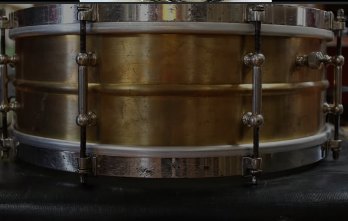
Leedy was one of the great names of American drum making. Founded by Ulysses G. Leedy in Indianapolis in the 1890s, the company grew into what it billed as the world's largest drum factory before being sold to C.G. Conn in 1929, with production moving to Elkhart, Indiana as the new decade opened. A brass-shell Leedy from the 1930s sits right in that transition — catalog craftsmanship from an era when a snare drum was built to outlive its owner.
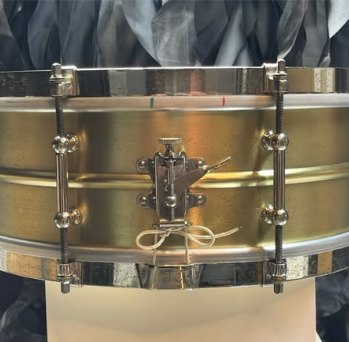
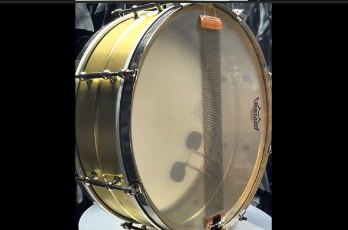
This one is a classic of the type: a spun brass shell with a center bead for stiffness, nickel-plated tube lugs, and a simple, positive side-throw strainer. The snare wires and the internal muffler are later replacements, which makes this a player's drum — not a museum-case original, but an honest working instrument meant to be tuned up and gigged. For a drum like this, that is a virtue: it can be played hard without a collector wincing.
Letting the buildup go
The work here is patience more than anything. Every component comes off the shell and is cleaned by hand — lugs, rods, hoops, strainer, butt plate — each one worked until the nickel shows its depth again. The shell itself is cleaned in stages, lifting away the accumulated toxins and oxidation without cutting into the metal. The goal is never to make an old drum look new; it is to let almost one hundred years of buildup go while the honest character of the brass stays put.
What emerges is a warm satin glow rather than a mirror shine — brass the way it looked when a working drummer pulled it from its case, not brass pretending it was spun yesterday. Fresh heads top and bottom, and the drum speaks again: that dry, wide-open crack that only a thin brass shell of this vintage delivers.
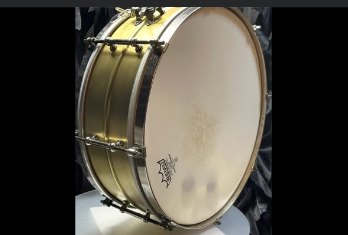
Bench record
- Maker
- Leedy Manufacturing Co.
- Era
- 1930s
- Size
- 14 × 5 in.
- Shell
- Spun brass, center bead
- Hardware
- Nickel-plated tube lugs, side-throw strainer
- Snares
- Replacement wires, cord-tied at the butt
- Muffler
- Internal, later replacement
- Condition
- Player's drum — restored to be played
- Work performed
- Full disassembly, hand cleaning of shell and hardware, removal of ~100 years of environmental toxins, new heads, reassembly and tuning