The Pearl Jupiter
A 1976 chrome-over-brass 14 × 6.5 from Chiba, Japan — the drum that announced Pearl was done making other people's instruments
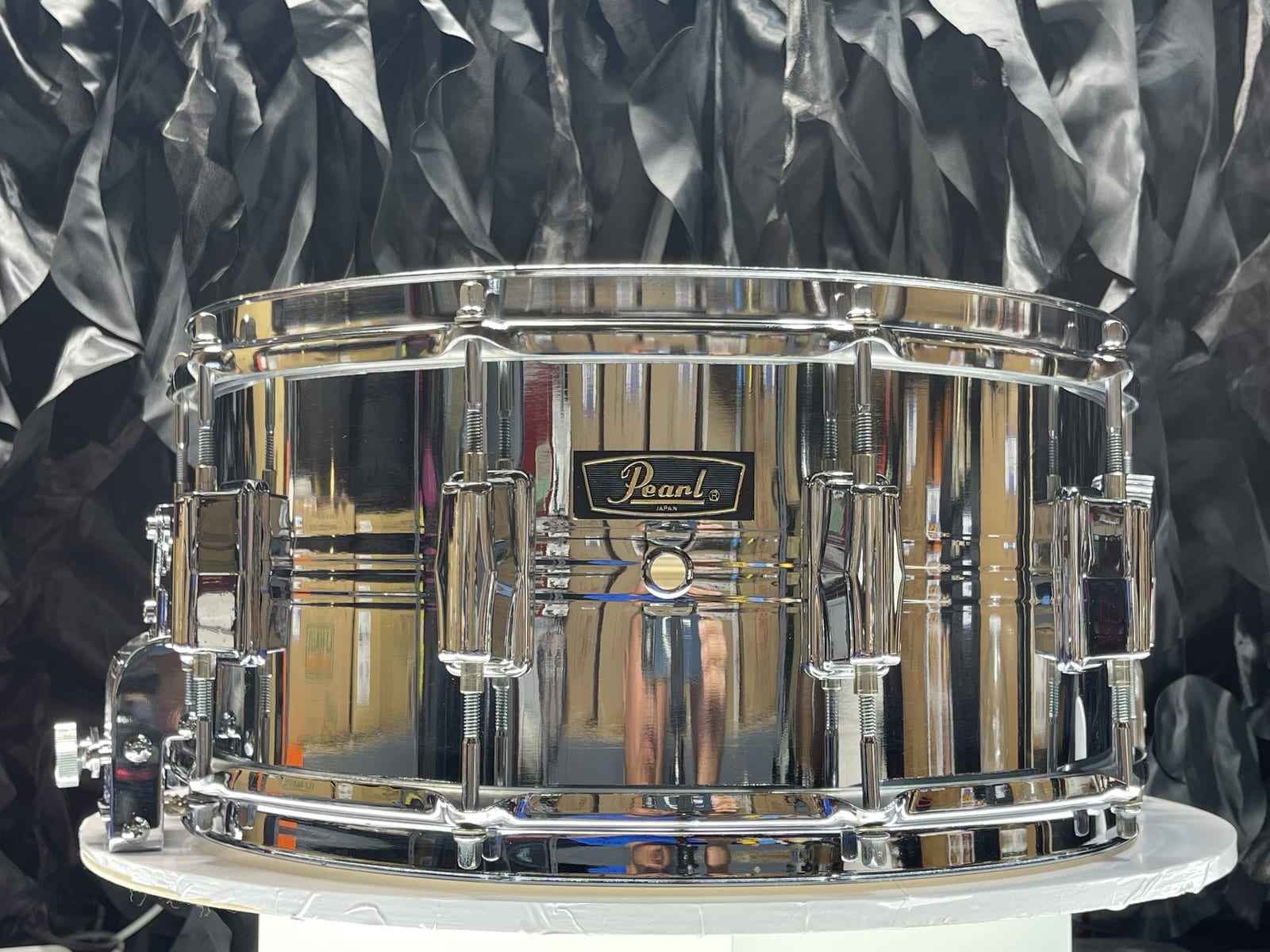
By 1976, the American drum companies had spent a decade treating Japanese imports as a punchline. This drum is what the punchline sounded like when it stopped being funny. The Jupiter was Pearl's professional metal snare — a seamed brass shell, rolled with a center bead, plated in mirror chrome, and hung with ten lugs — and at 14×6.5 inches it came in the deep configuration that has always been the harder one to find. Most Jupiters that surface today are the shallower 5-inch drums. The six-and-a-half is the exception, and an example in this condition is rarer still.
Out of Sumida
Pearl did not begin as a drum company. Katsumi Yanagisawa founded the firm in Tokyo's Sumida ward on April 2, 1946, making music stands in the rubble economy of postwar Japan. Drums came in 1950, a new name — Pearl Musical Instrument Company — in 1953, and by 1961 a purpose-built factory in Chiba was turning out enormous numbers of inexpensive kits that shipped west wearing other people's badges: Apollo, Coronet, Majestic, and dozens more. For most of the sixties, Pearl was the anonymous engine behind the "stencil" drums that filled American pawnshops and beginners' basements.
The turn came in 1966, when Pearl introduced the President series — its first professional line sold proudly under its own name. The Jupiter snares belong to that same declaration of intent. Where the stencil kits were built to a price, the Jupiter was built to a standard: a genuine brass shell at a moment when brass was the prestige material of American snare drum making, finished and fitted to compete head-on with the drums it had once quietly imitated. Within a few years Pearl would be distributed in the United States by Norlin, the parent company of Gibson — no longer anonymous at all.
The instrument
The shell is the whole argument. Brass is dense and soft compared with steel, and it rings darker — round in the middle, with an edge that flatters rimshots instead of turning them brittle. The chrome plating stiffens and brightens the outer surface, which is the same recipe that made the great American metal snares of the era what they were. Pearl rolled a single center bead into the shell for stiffness and snapped the sound into focus with it. Ten lugs — generous for the period — pull the triple-flange hoops down evenly, and the extra half-inch and change of depth over the common 5-inch model is where this drum's authority lives: more air, more throw, more chest.
Pearl offered the Jupiter line with two throw-off systems — a conventional side strainer, or the elaborate parallel-action mechanism that ran wires clamped at both ends across the full width of the head. Either way, the line sat at the top of Pearl's snare catalog, and it earned its keep. A famous Police-era Pearl chrome-over-brass snare — closely related to the Jupiter line, though drum historians still debate the exact model, as Pearl's own catalogs waffled between the B4514 and 4214 designations in that era — remains one of the most famous unpaid endorsements in the instrument's history.
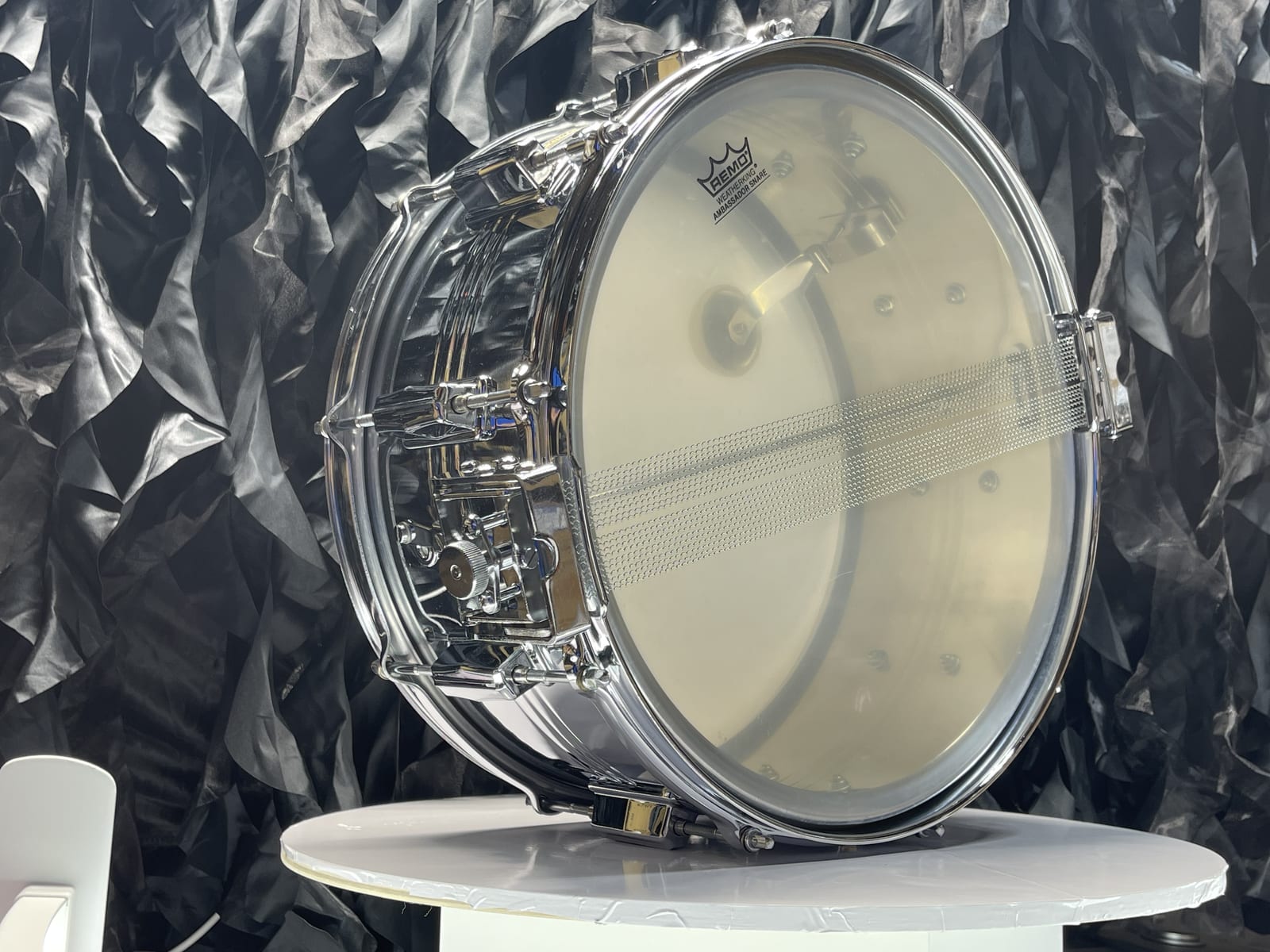
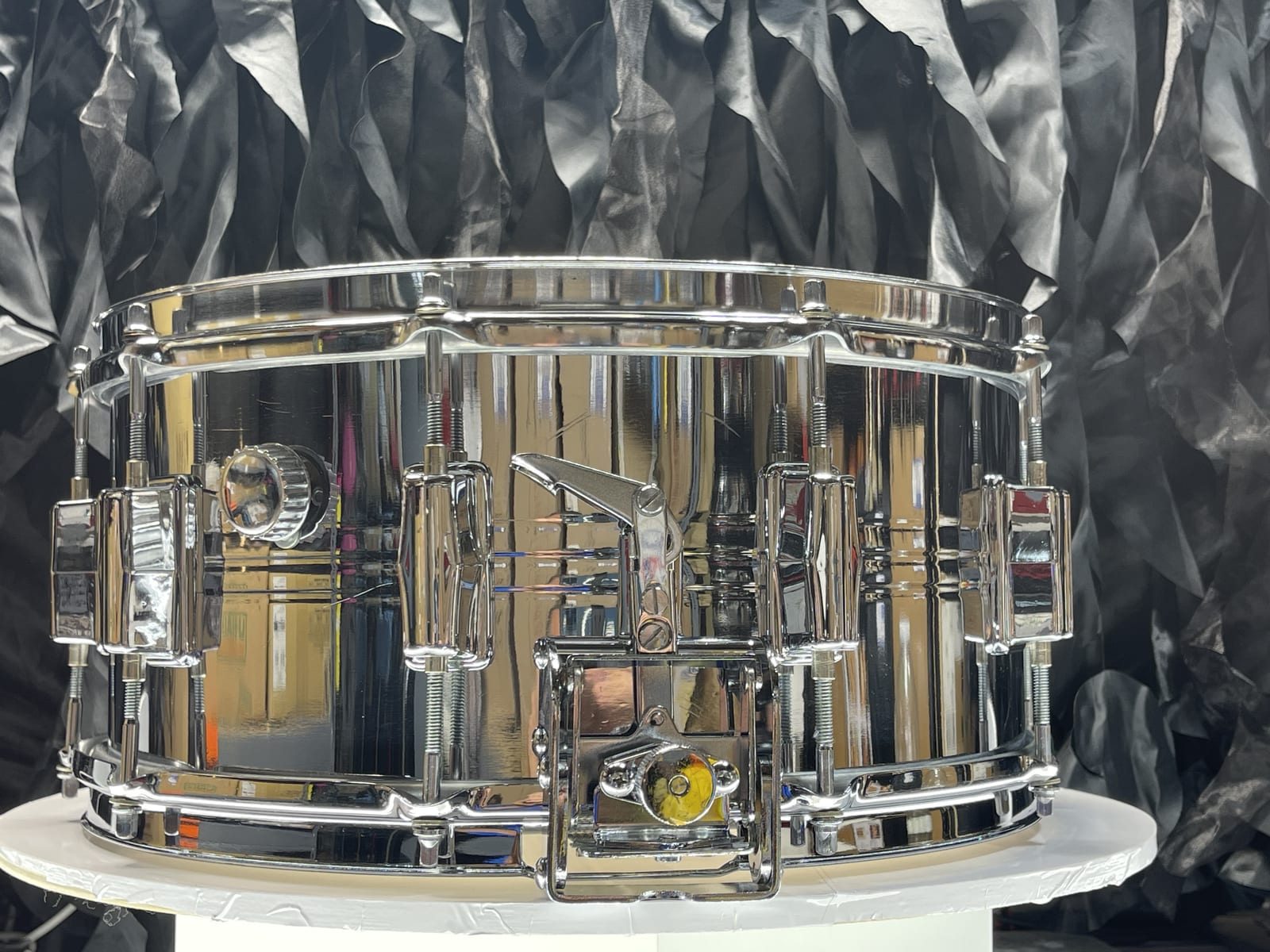
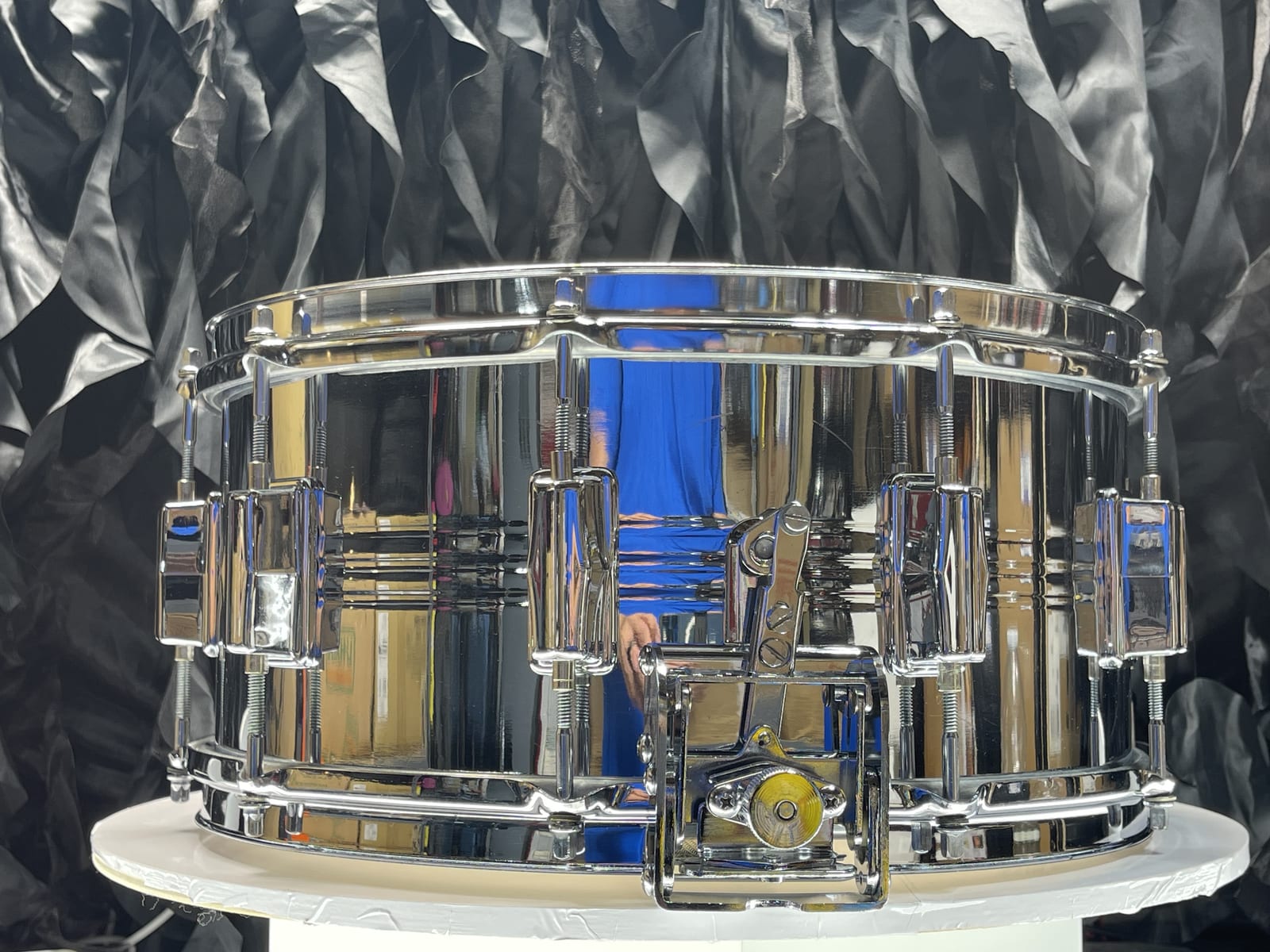
“The sound of this snare drum can be described as loud, with lots of attack. It is a very focused, but also massive-sounding drum. Perfect for rock.”
The restoration
This example left the Chiba factory in 1976 and arrived here wearing fifty-odd years honestly. The restoration brought it the rest of the way back: the drum was taken down completely, every component cleaned and brought back to spec, the chrome returned to its original mirror, and the whole instrument reassembled to play — not to sit in a case. What you see now is, functionally and cosmetically, the drum a Tokyo showroom would have displayed in 1976. It is in perfect condition, and it is meant to be played.
The sound
Deep brass drums do a particular thing that neither steel nor wood quite manages: they are loud without being harsh, dark without being dull. Tuned low, this Jupiter gives a wet, fat backbeat with a long controlled ring; tuned up, it dries out into a crack that still carries the shell's warmth underneath. The snares respond instantly at the edges, cross-stick lands round and woody off the chrome, and rimshots have the kind of body that made brass the professional's metal in the first place. It is a working drum from the year Pearl decided it was done working for everyone else.
Bench record
- Maker
- Pearl Musical Instrument Co., Chiba, Japan
- Model
- Jupiter
- Year
- 1976
- Size
- 14 × 6.5 in.
- Shell
- Brass, chrome-plated (COB), single center bead
- Tension
- 10 lugs, triple-flange hoops
- Condition
- Fully restored — perfect / showroom